
China Top 10 Solar LED Flood Lights Manufacturers

China has become a major sourcing hub for Solar Led Flood Lights, serving projects from residential gardens to highways and industrial yards. Its manufacturers offer varied designs, wattages, battery capacities, and control systems. Yet product quality differs widely. A bright specification sheet does not always guarantee reliable night-time performance.

This guide introduces ten leading Chinese manufacturers for buyers seeking dependable solar lighting solutions. It examines production experience, product ranges, certifications, testing procedures, customization services, and export capabilities. Attention is also given to practical details, including photovoltaic panel efficiency, lithium battery protection, waterproof ratings, charging time, motion sensors, and illumination coverage. These factors matter when a flood light must operate through cloudy weather or long winter nights.

Each company should be assessed through verifiable evidence, not attractive photographs alone. Factory audits, sample testing, warranty terms, and customer feedback can reveal important differences. In real projects, a light that performs well for three nights may still disappoint after several months. That point deserves more attention.

The selection process also considers communication quality and after-sales support. Clear technical drawings, stable packaging, replacement parts, and responsive service can reduce project risks. However, no ranking can fit every application. A rural pathway, warehouse entrance, and sports court require different lighting calculations. Buyers should confirm local climate conditions, installation height, required brightness, and compliance requirements before placing an order.

This overview is intended to support informed comparison. It does not replace independent testing. Check the details carefully. Reliable lighting begins with evidence, not promises.
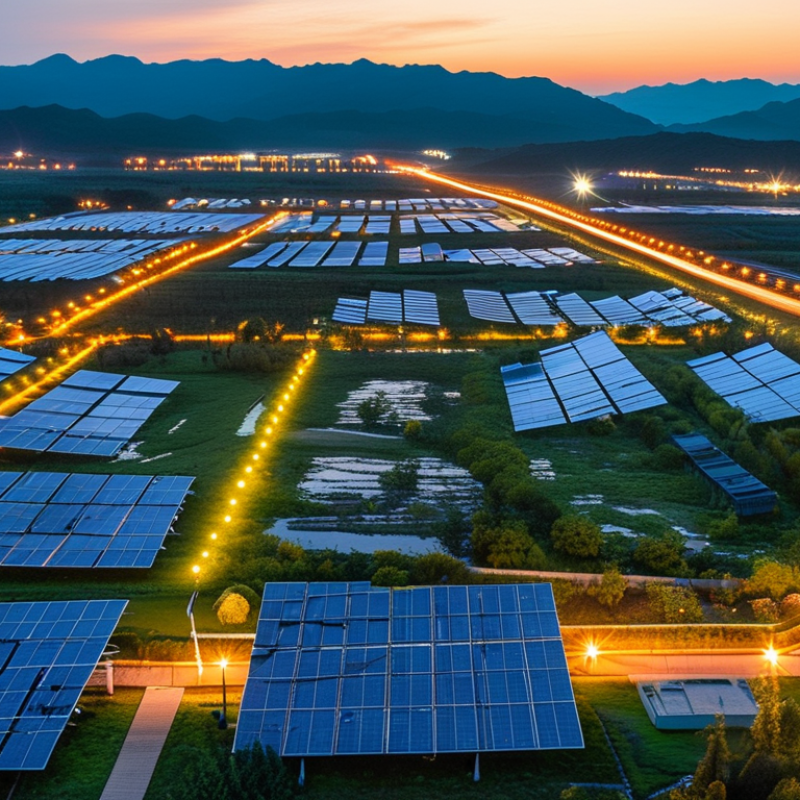
China Top 10 Solar LED Flood Lights Manufacturers

What Are Solar LED Flood Lights and How Do They Work?

Solar LED flood lights are outdoor fixtures that use sunlight to produce electricity and illuminate large areas. A typical unit contains a solar panel, rechargeable battery, LED chips, controller, and motion or light sensor. During daylight, the panel converts sunlight into electrical energy. The controller stores that energy in the battery, usually through a lithium-based cell.

After sunset, the sensor activates the LEDs automatically. Some models provide steady lighting, while others brighten when movement is detected. A driveway light may remain dim for several hours, then reach full brightness when someone approaches. Placement matters greatly. Install the panel toward the strongest available sunlight, away from trees, walls, and roof shadows. Even partial shade can reduce charging performance.

Weather resistance also deserves careful checking. Look for sealed housing, protected wiring, and a suitable outdoor ingress rating. In real installations, winter clouds, dust, and low temperatures can shorten operating time. It is easy to overestimate advertised brightness because measurements may use ideal laboratory conditions. Battery capacity also declines with age. Clean the panel with a soft, damp cloth, and inspect mounting screws after severe weather. Motion sensors can be convenient, but sensitive settings may trigger the light for passing pets or moving branches. A practical installation often needs adjustment after several nights.

How to Evaluate China’s Top Solar LED Flood Light Manufacturers

China Top 10 Solar LED Flood Lights Manufacturers

When evaluating China’s top solar LED flood light manufacturers, begin with evidence, not catalog brightness claims. Request product samples, factory test reports, and current certification documents. Check whether the stated lumen output matches independent testing under controlled conditions. A bright sample proves little.

Examine the complete system. Ask about LED efficiency, panel type, battery chemistry, charging time, and lighting duration during cloudy weather. Confirm the waterproof rating through documented testing, not printed labels alone. Inspect the housing, cable seals, mounting bracket, and corrosion resistance. Small details often fail first. Review production capacity, quality-control procedures, and traceability for critical components. A factory audit or live video inspection can reveal useful differences between suppliers.

Warranty terms deserve careful reading. Confirm coverage for batteries, controllers, LEDs, and water damage. Ask how replacement parts are supplied after installation. Test several samples in a realistic outdoor location for at least two weeks. Record charging performance, motion-sensor response, light distribution, and overnight runtime. One limitation remains: laboratory figures may not match winter conditions or dusty sites. I have seen buyers focus on price and regret weak after-sales support. A lower quotation is not always lower cost. Evaluate communication speed, technical answers, packaging quality, and the manufacturer’s willingness to discuss failures openly. That honesty is meaningful.

How to Evaluate China’s Top Solar LED Flood Light Manufacturers

Recommended procurement weighting for comparing manufacturers of solar LED flood lights. The chart evaluates product and supplier capabilities rather than displaying company or brand data.

Certification and compliance help verify market eligibility, while lighting performance, battery reliability, solar charging efficiency, weather protection, warranty coverage, and production capability indicate long-term product value. Buyers should confirm test reports, IP ratings, battery specifications, warranty terms, and samples before making a final decision.

Top 10 Solar LED Flood Light Manufacturers in China

Top 10 Solar LED Flood Light Manufacturers in China

China’s solar LED floodlight sector benefits from strong photovoltaic and electronics supply chains. The IEA’s Renewables 2024 report recorded about 510 GW of global renewable capacity additions in 2023. Solar power represented roughly 75% of that growth. This expansion supports wider demand for independent outdoor lighting in farms, warehouses, roads, and construction areas.

Selecting the top 10 solar LED flood light manufacturers in China requires more than comparing wattage. Reliable manufacturers should provide photometric testing, battery-cycle data, IP ratings, and clear warranty terms. The U.S. Department of Energy states that LEDs use at least 75% less energy than incandescent lighting and can last up to 25 times longer. However, solar floodlights also depend on panel size, charging hours, temperature, and battery quality.

Look for verified performance.

In practical evaluations, inspect illumination after two cloudy nights, not only on a showroom wall. Check whether the controller reduces brightness automatically when battery voltage falls. Ask for test reports based on recognized standards, including LM-79 or equivalent laboratory measurements. A higher lumen figure may hide poor optical distribution.

No ranking is perfect. Some suppliers publish impressive laboratory results but provide limited field evidence, so buyers should compare samples, replacement policies, and factory quality records before making a final decision.

Key Products, Technologies, and Market Strengths of Each Manufacturer

China’s top ten solar LED flood light manufacturers serve different installation needs. One focuses on integrated units with monocrystalline panels, lithium batteries, and compact aluminum housings. Another builds high-power floodlights for yards, warehouses, and rural roads. Its strength is wider beam coverage and stronger heat dissipation. A third supplier develops residential models with PIR motion sensors, adjustable brightness, and simple wall brackets. These products reduce wasted energy during quiet hours.

Several manufacturers compete through smart controls. Their floodlights support remote monitoring, timer settings, and wireless management through mobile platforms. One specializes in LiFePO4 battery systems, which offer stable cycling and safer thermal performance. Another emphasizes MPPT charging, improving energy collection during weak sunlight.

Coastal projects often choose suppliers using powder-coated aluminum, sealed cable glands, and IP66 protection. Industrial manufacturers add IK-rated covers and thicker mounting arms. Small export-oriented factories usually provide flexible OEM designs, private packaging, and faster sample changes.

Performance claims still require careful checking. A listed runtime may fall sharply during cloudy weeks or winter conditions. Field tests should measure charging time, nighttime brightness, battery recovery, and sensor response. Some suppliers provide useful photometric data and aging reports; others offer only attractive laboratory figures. That gap matters. One manufacturer may have excellent pricing but limited after-sales testing support. Another may deliver better thermal design while requiring larger minimum orders. Buyers should inspect test records, warranty terms, spare-part access, and installation feedback before selecting a model. Even strong products can fail when panel angles, shadows, or drainage are ignored.

How to Choose the Right Chinese Solar LED Flood Light Supplier

Choosing a Chinese solar LED flood light supplier requires more than comparing prices. IRENA reported 473 GW of renewable capacity additions in 2023, with solar contributing about 346 GW. That growth increases supplier competition, but quality still varies. Request factory registration, production photos, test records, and traceable component lists.

Ask for measurable performance data. Check delivered lumens, beam angle, charging time, battery capacity, and nighttime autonomy. A useful sample should operate after several cloudy days, not only under perfect sunlight. Request an IP65 or higher test report, salt-spray evidence for coastal projects, and battery-cycle results. IEC 60598 compliance is also worth verifying through an independent laboratory. Be careful with vague claims such as “five-day backup.”

The Global Off-Grid Solar Market Report 2024 highlights the importance of reliable after-sales support in solar lighting markets. Therefore, assess spare-part availability, firmware access, replacement procedures, and warranty exclusions. Ask whether the supplier controls battery assembly and final testing. A factory audit can reveal loose wiring, inconsistent sealing, or rushed soldering. Small defects matter.

Do not select from one sample alone. Test several units from different batches. I have found that impressive brightness can hide poor battery management. A lower-cost offer may become expensive after repeated replacements. Require a signed specification sheet, inspection plan, and payment milestones linked to verified production quality. No supplier is perfect, so honest disclosure of limitations is a stronger trust signal than polished marketing.

China Top 10 Solar LED Flood Lights Manufacturers - How to Choose the Right Chinese Solar LED Flood Light Supplier

No. Evaluation Dimension Credible Industry Benchmark Recommended Verification Method Selection Importance Suggested Weight
01 LED luminous efficacy A practical commercial benchmark is approximately 120–180 lm/W for the LED system, depending on LED package, optics, temperature, and operating current. Request an LM-79 or equivalent photometric report and compare delivered lumens with input wattage. Higher efficacy can provide greater illumination or longer operating time at the same system size. 15%
02 Solar panel technology Monocrystalline silicon panels are commonly selected for compact solar flood lights because they generally offer higher efficiency than polycrystalline panels of similar size. Check the panel datasheet for rated power, open-circuit voltage, short-circuit current, dimensions, and temperature coefficients. Panel output affects charging speed, winter performance, and recovery after cloudy weather. 12%
03 Battery chemistry and capacity Lithium iron phosphate (LiFePO4) is widely used where safety, cycle life, and thermal stability are priorities. Battery capacity should be stated in watt-hours, not only amp-hours. Verify cell type, nominal voltage, rated watt-hours, protection circuit, operating temperature, and test documentation. Battery capacity determines nightly runtime, while chemistry strongly affects service life and safety. 15%
04 Lighting runtime and control mode Credible specifications should identify the operating profile, such as full-power duration, dimming schedule, motion-sensor mode, or dusk-to-dawn operation. Runtime varies with season and location. Request a runtime curve based on defined solar irradiance, battery state of charge, LED power, and dimming settings. A runtime claim without a defined test condition cannot be compared reliably between suppliers. 12%
05 Weather protection Outdoor flood-light housings commonly target IP65 or higher. IP65 indicates protection against dust ingress and water jets; it does not mean the product is suitable for immersion. Review the IP test report and inspect gaskets, cable glands, connector sealing, drainage, and housing assembly. Ingress protection reduces failures caused by rain, dust, condensation, and outdoor contamination. 10%
06 Mechanical durability Aluminum housings, corrosion-resistant fasteners, tempered glass or UV-stable covers, and robust mounting brackets are common requirements for permanent outdoor installations. Ask for material specifications, salt-spray or corrosion-test evidence, vibration testing, and the maximum recommended wind load. Mechanical failure can occur even when the electrical components remain functional. 8%
07 Photometric performance Beam angle, mounting height, uniformity, glare control, color temperature, and color rendering index are more meaningful than lumens alone. Common outdoor CCT options are approximately 3,000–6,500 K. Request an IES/LDT file, beam-distribution diagram, color-temperature tolerance, and a lighting simulation for the target site. Correct light distribution prevents dark areas, excessive glare, and inefficient over-lighting. 10%
08 Quality and compliance documentation A professional supplier should provide applicable test reports, declarations, factory quality procedures, incoming-material controls, and production inspection records. Validate report numbers, issuing laboratories, product model numbers, test standards, and report dates with the issuing organization. Authentic documentation reduces regulatory, safety, and project-approval risks. 8%
09 Customization and supply capability Relevant capabilities may include private-label packaging, lighting-control programming, bracket adjustment, cable configuration, color options, and production traceability. Confirm minimum order quantity, sample process, monthly capacity, component lead times, quality-control checkpoints, and change-control procedures. A technically suitable product may still fail if the supplier cannot maintain consistent volume or specifications. 5%
10 Warranty and after-sales support A written commercial warranty commonly specifies the coverage period, excluded conditions, replacement process, spare-parts policy, and response time. Warranty length alone does not prove product quality. Review the warranty document, failure-report procedure, replacement terms, technical-support channels, and availability of critical spare parts. Clear support terms reduce total ownership cost and downtime after installation. 5%
Comparison note: Supplier claims should be compared only when LED power, battery watt-hours, panel wattage, operating profile, test conditions, and lighting requirements are defined consistently.
Go to Top